



Energy generation
We generate electricity, steam, heat and connections.
Waste can contribute to energy supply. Its energy content enables it to be used for energy generation in our plants.
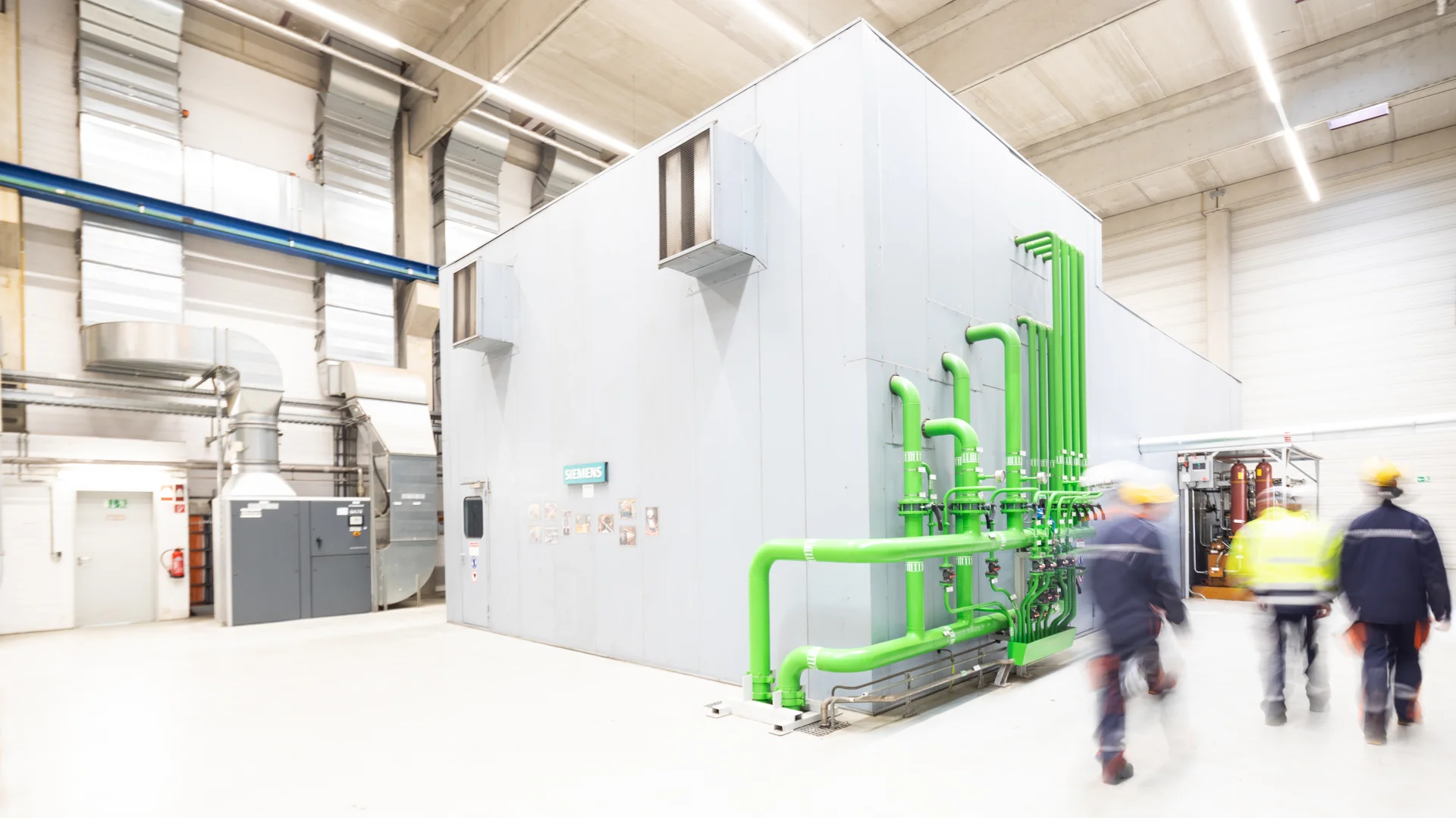
16 of our 17 waste-to-energy plants are technically designed for combined heat and power generation (CHP). The steam produced during thermal waste treatment can be used to generate electricity, fed into district heating networks or supplied to industrial companies as process steam. Coordinated operating processes support the safe operation of our plants.
Our aim is to use the energy contained in waste as efficiently as possible. Some municipalities have been working with companies of the EEW Group for many years. Together with industrial customers, our EEW team develops individual energy supply concepts tailored to their respective production processes. In this way, we provide solutions designed to meet our customers’ specific energy needs.
Energieerzeugnisse
Energy from Waste
Electricity generated from waste is an important source of energy. The material’s high calorific value makes it particularly suitable for energy recovery.
The waste is incinerated in a boiler at very high temperatures. The combustion chamber, secondary combustion zone and boiler are surrounded by hundreds of tubes through which feedwater flows. The heat released by the burning waste turns the water into steam, which drives a turbine at a pressure of 40 bar.
Oil burners are used only to ignite the waste or if the temperature drops significantly. Under normal operating conditions, the waste then burns without additional fuel.
Depending on the size of the facility, EEW’s waste incineration plants generate enough electricity to meet the needs of between 27,000 households in Göppingen and 87,000 households in Helmstedt.
Fernwärme: Ideal für alle in der Nähe
Während in konventionellen Kraftwerken oft bis zu 40 % der Energie als Abwärme verloren geht, wird sie in den EEW-Abfallverbrennungsanlagen mit Kraft-Wärme-Kopplung weiter genutzt. Parallel zur Stromabgabe an das regionale Stromnetz wird nach Bedarf Heizwärme an Stadtwerke oder durch lokale Fernwärmenetze zu den Verbrauchern geleitet. Ob private Haushalte oder Unternehmen im näheren Umfeld der Anlage – Fernwärmeabnehmer benötigen durch dieses Heizsystem keine weiteren Energieträger wie Öl und Gas und sparen Platz für eigene Heizkessel.
Dampfnutzung für industrielle Prozesse.
In industriellen Fertigungsprozessen spielt Prozessdampf eine große Rolle. Besonders die chemische Industrie arbeitet mit dieser Form von Energie. Immer häufiger nutzen Industriebetriebe die aus einer benachbarten Müllverbrennungsanlage erzeugte Energie.
Die Gewinnung von Prozessdampf funktioniert nach dem Prinzip der Kraft-Wärme-Kopplung. Die Turbine einer Müllverbrennungsanlage wird durch den bei der Verbrennung des Abfalls entstehenden Dampf angetrieben. Dadurch wird nur elektrische Energie erzeugt.
Entnimmt man der Turbine jedoch einen Teil des Dampfes, kann dieser zur Erzeugung von Fernwärme, als Prozessdampf für industrielle Prozesse und zur Stromerzeugung genutzt werden. Das energetische Potential des Abfalls lässt dies in jedem Fall zu.