



Portfolio
We turn waste into energy.
And challenges into solutions.
Energy supply and waste management are fundamental needs of our highly developed industrial society and must be planned responsibly, collaboratively and with foresight. Only in this way can security of supply and economic viability be safeguarded over the long term, environmental impacts taken into account and resources used as efficiently as possible. With EEW, you have a competent partner at your side – a company with extensive experience in managing waste streams and generating energy through thermal waste treatment.
Excellence and experience.
With more than 50 years of expertise in waste recovery and disposal, and as the operator of one of Germany’s largest portfolios of waste treatment facilities, we have the experience and expertise to offer every customer a tailored package of services. This applies both to conventional thermal waste treatment and to forward-looking sewage sludge treatment.
Forward-looking solutions.
With EEW, local authorities can prepare for future requirements. We develop tailored solutions for reliable sewage sludge treatment. At existing EEW sites in particular, valuable synergies can be achieved with existing waste incineration facilities. Mono-incineration of sewage sludge creates the conditions needed for phosphorus to be recovered in downstream processes. This is particularly relevant in view of future legal requirements for phosphorus recovery.
Comprehensive services.
For local authorities, we ensure tailored waste management concepts by planning, constructing and operating advanced waste incineration facilities, and supply the resulting energy to the region. We offer companies a broad portfolio of thermal waste treatment and disposal services that meets the needs of both long-standing partners and spot-market customers. We provide industrial companies located near our facilities with a demand-based supply of process steam that can make commercial sense. For this purpose, we use the energy released during thermal waste treatment.
Energy close to you.
Find out more about our services on the following pages and talk to us about your individual projects. We currently operate 17 facilities in Germany and neighbouring countries – so we are close to you, too. Together with you, we develop integrated waste management and energy generation solutions that make a difference today and in the future.
Energy from Waste
Electricity from waste.
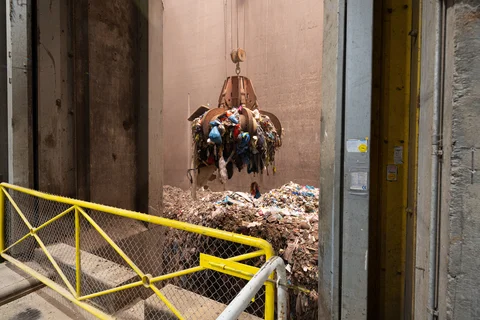
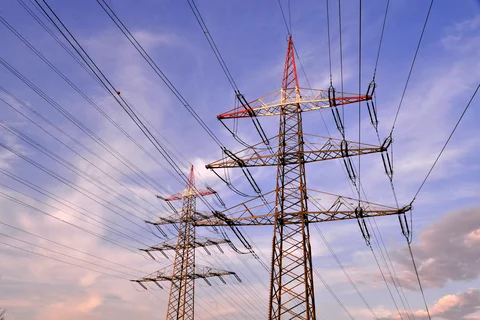
Thermal waste treatment uses the energy contained in waste to generate electricity. The electricity generated is fed into the power grid. The waste is combusted in a boiler. The heat released in the process heats water in the boiler’s tube system, producing steam. Under high pressure, this steam drives a turbine that generates electricity. During regular operation, the combustion process is self-sustaining and does not require additional fuels. Oil burners are used to start up the plant or if temperatures drop significantly.
EEW’s thermal waste treatment facilities generate electricity and – depending on the technical capabilities of each site – also provide district heating and/or process steam.
District heating for the region.
Thermal waste treatment generates heat that can be used for district heating at suitable EEW sites. Part of the energy available from the thermal waste treatment process is used to provide heat and transferred to the respective district heating system. Local heating networks then distribute this heat to connected households, public facilities and businesses. Whether and to what extent district heating is provided depends on the individual EEW site and the available supply infrastructure.
Process steam for industry.
Many industrial processes require heat in the form of steam. At suitable sites, EEW can provide businesses in the surrounding area with process steam generated through thermal waste treatment. The steam generated during combustion is initially used to produce electricity. Part of the steam can be extracted from the process and made available for industrial applications. Whether and to what extent process steam can be supplied depends on the individual EEW site, the technical requirements and the available supply infrastructure.