



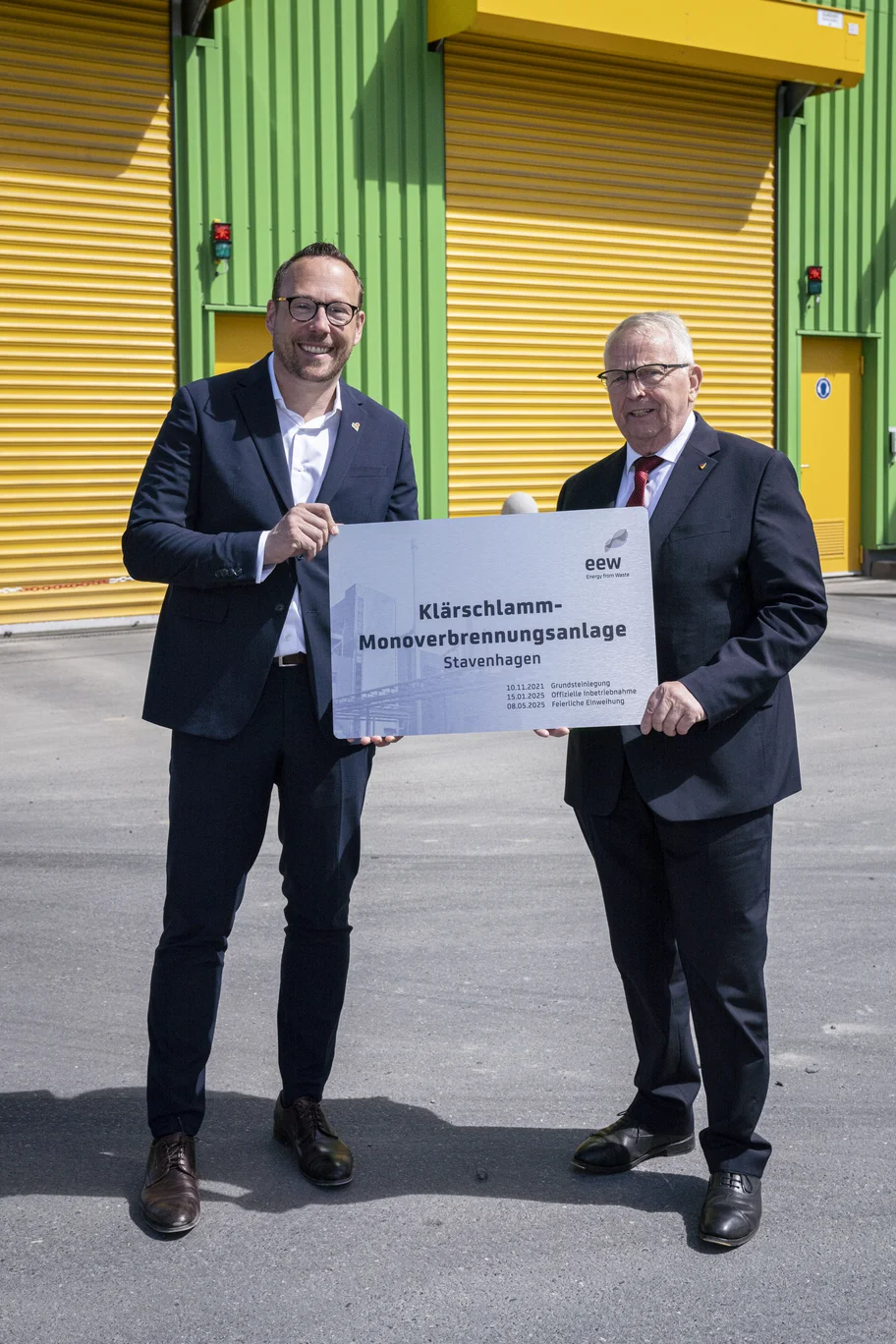
![[Translate to English:]](/fileadmin/_processed_/2/5/csm_gruppenfoto_1_096a17c84a.webp "[Translate to English:]")
Apart from Dr Till Backhaus, Minister for Climate Protection, Agriculture, Rural Areas and the Environment in Mecklenburg-Vorpommern, representatives of communal partners, local authorities and businesses were also in attendance.
“I am very pleased that we can attend this festive dedication here today. Due to significantly increased construction costs, not nearly all planned and required plant capacities for sewage sludge incineration in Germany can actually be built. But these capacities are urgently needed to implement the paradigm shift in sewage sludge management. Today, thermal recycling, meaning the incineration of sewage sludge, is a central component of safe, sustainable and resource-friendly disposal, and a prerequisite for developing processes for the large-scale recovery of phosphorous from the sludge ash. Here in Stavenhagen, an important building block for this development is now in operation.
What EEW has built here is very impressive. Not only is the plant equipped with state-of-the-art technology, but it also satisfies the strictest environmental standards. It guarantees stable, energy-efficient recycling of sewage sludge, and its conceptual design makes it possible to collect and treat the ashes that are produced under clearly defined conditions,” explains Dr Till Backhaus, Minister for Climate Protection, Agriculture, Rural Areas and the Environment.
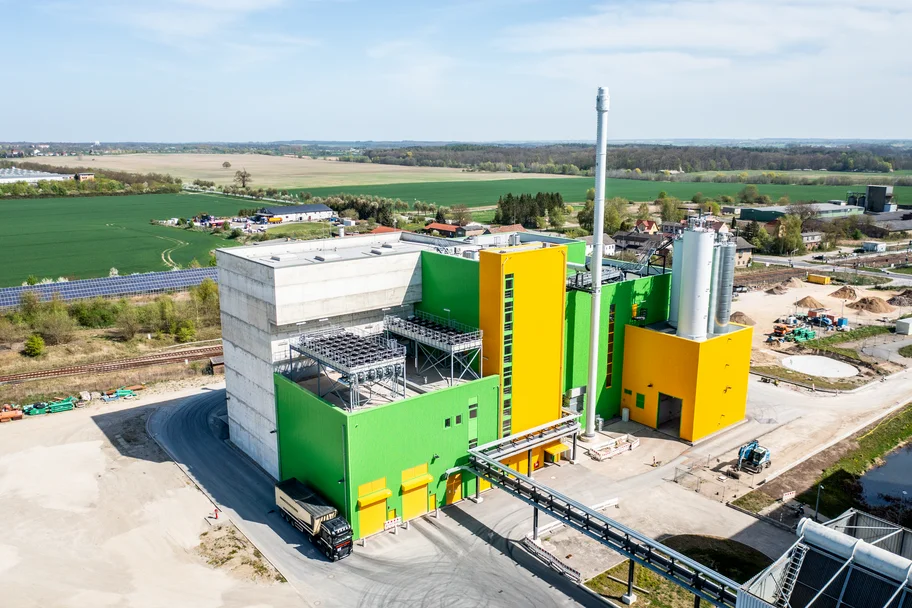
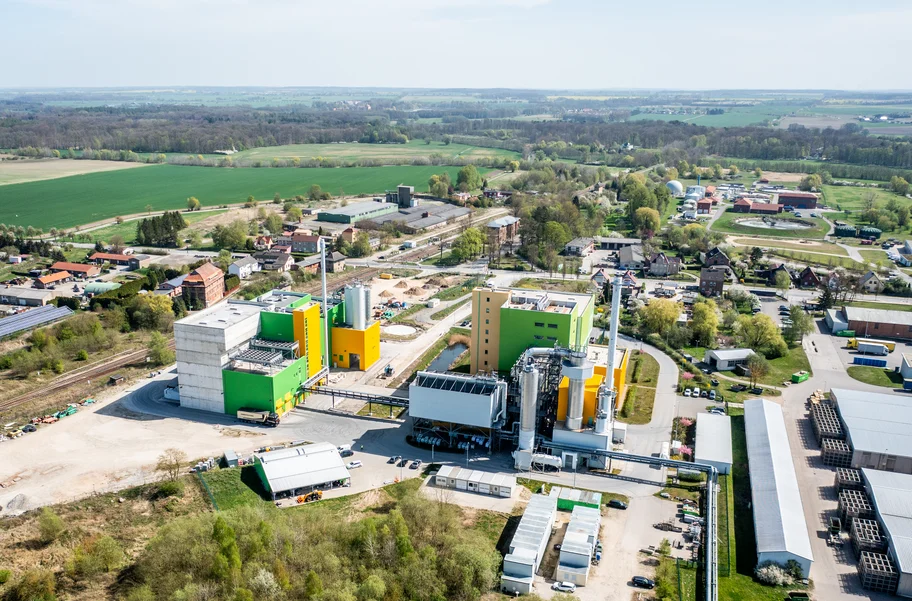
The plant has the capacity to treat up to 160,000 tonnes of original sewage sludge material per year and is laid out to handle the thermal incineration of all sewage sludge produced in the state of Mecklenburg-Vorpommern.
More environmental protection, less burden
„With this plant, we permanently remove environmental and health pollutants from the biosphere and at the same time create the prerequisite conditions for recovering phosphorous – a crucial but finite raw material,” explains Timo Poppe, CEO of the EEW Group.
While nationwide the proportion of agricultural sewage sludge recycling already dropped to 13 percent in 2023, that number in Mecklenburg-Vorpommern is still significantly higher at 56.8 percent. The new plant now provides safe recycling for the citizens of Mecklenburg-Vorpommern in their own state, laying the groundwork for an ecologically consistent transition:
- No more pollutants like microplastics, medication residues and hormones in their fields.
- No more risk for soils, groundwater and foods.
Heat from waste – for the region
One essential benefit of the location is its intelligent energetic utilisation: The waste heat produced during the incineration process will be fed into the climate-friendly district heating network of the city of Stavenhagen. Work on the construction of pipelines to connect the KVA with the district heating grid and expand the grid within the city is already underway. District heat will be available starting in 2026.
With the dedication in Stavenhagen, EEW has now put the third of five approved sewage sludge mono-incineration plants into operation.