



Carbon Capture and Storage at a Waste-to-Energy Facility in Germany: The EEW CaReS Knapsack Model Project
Germany has set ambitious climate goals: reaching climate neutrality by 2045 and becoming climate positive by 2050. A key component of this transformation is waste-to-energy (WtE), which has been identified as one of the few sources of CO2 emissions that will remain unavoidable in the future.
In order to reduce these unavoidable residual emissions, CO2 must be efficiently captured from flue gas streams using suitable technologies and then safely transported via pipelines, rail, or ship and either permanently stored deep underground or reused in a meaningful way. Since around 50% of the waste treated in waste incineration is of biogenic origin, the resulting biogenic CO2 can also be actively removed from the atmosphere through capture and storage. Thus, carbon capture in waste incineration not only reduces unavoidable residual emissions as much as possible, but also generates so-called negative emissions.
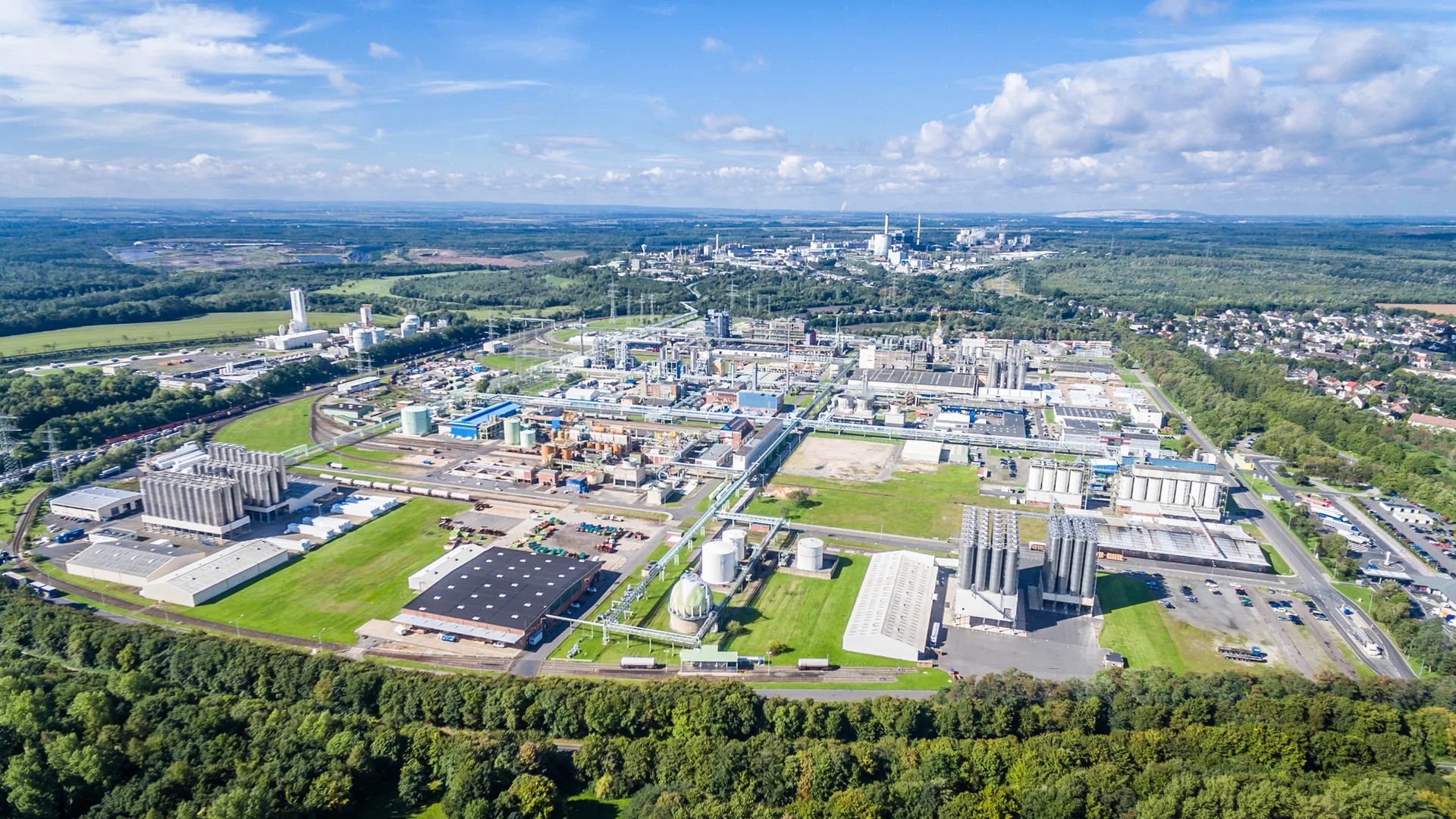
This is why, at our site in Cologne-Hürth, within the Knapsack Chemical Park in North Rhine-Westphalia, we are partnering with YNCORIS, SEFE, and OGE to explore the feasibility of a CO₂ capture and storage solution through the EEW CaReS Knapsack model project. The WtE facility processes up to 320,000 metric tons of residual waste from households and businesses each year, supplying companies in the chemical park with process steam and electricity.
Working Together for Climate Protection and CO₂ Neutrality
We are building on our strengths: genuine collaboration, decisive action, and the courage to think differently.
In close cooperation with our partners across the CO₂ value chain, we are assessing the potential for a carbon capture facility with an annual capacity of up to 300,000 metric tons. The plan is to capture CO₂ directly from the plant’s flue gases, transport it out of the Knapsack Chemical Park via a newly developed pipeline system — provided the planned infrastructure is built — and then store it permanently in suitable geological formations.
The model project includes:
-
Developing a carbon capture facility with a capacity of up to 300,000 tons/year at a waste-to-energy plant,
-
Designing a safe and efficient transport solution to the storage site,
-
Contributing to the development of essential infrastructure for permanent CO₂ storage.
Our partners:
-
YNCORIS GmbH & Co. KG – Operator of the chemical park infrastructure and co-owner of the waste-to-energy plant,
-
SEFE Securing Energy for Europe GmbH – A leading German energy company focused on supply security and sustainability,
-
OGE – One of Europe’s largest gas transport companies, with a 12,000 km high-pressure network and developer of CO₂ pipeline infrastructure in Germany.
Together with our partners, we aim to determine how carbon capture and storage at a thermal waste treatment facility can be implemented both technically and economically — paving the way for a significant contribution toward achieving climate goals.
With this innovative project, we are showcasing the untapped potential of thermal waste treatment in the fight against climate change. We are making a concrete contribution to building the critical infrastructure needed for CO₂ transport and storage — and making it clear that success depends on clear political and regulatory frameworks. Without reliable legal foundations, the necessary investments simply cannot happen.
The initiative could also help form a regional cluster of CO₂ emitters in the Cologne metropolitan area, accelerating the rollout of a future-ready CO₂ transport and storage network.