



A 360-degree approach to digitalisation
Three-dimensional scans: from outside and inside, from top to bottom
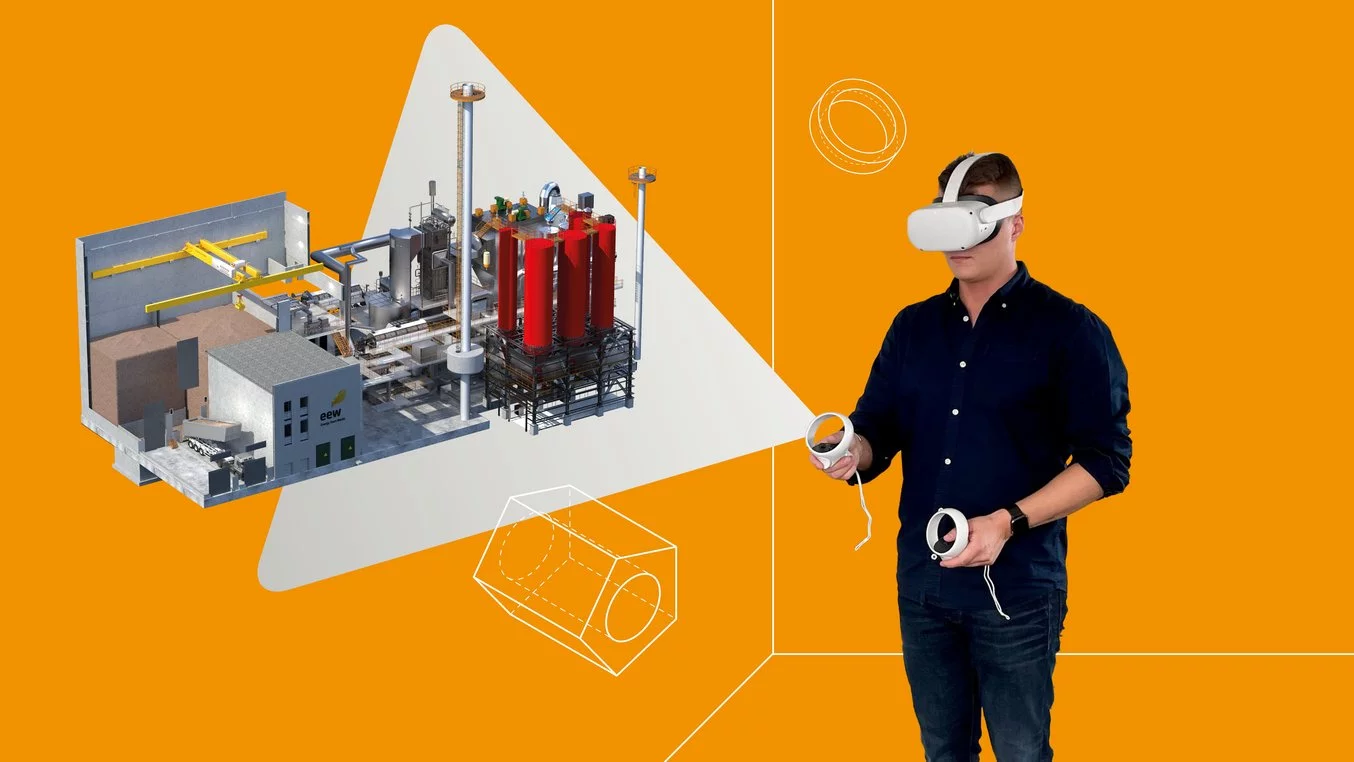
The advancement of digitalisation in the plants is evident in a project which scans all the facilities in 3D – from outside and inside and from top to bottom. With this data, we can recreate digital 3D models of the plants. “This enabled us to offer virtual tours of the Göppingen site during the coronavirus pandemic, taking the guests on a walkabout via their screens,” says Charleen Peter, Project Manager in the digitalisation team at EEW. On tours with virtual reality headsets, which are offered at trade shows, for example, guests can make their own way through the 3D model. The technical process of digitalisation is not all that complex in this case, according to Charleen Peter: “An employee from the contractor firm goes through the plant with a 360° camera and films all of the rooms. How long it takes depends on the size of the plant, but from the first recording until the finished model, it is no more than a week.”
Next stage: digital twin
Although it might initially sound like a complex technical gimmick, in future this will bring EEW significant economic and sustainable advantages. Detlef Nickel, Head of Maintenance at EEW’s Großräschen site, gives one example: “External partners who carry out work for us can get a first impression of our plant without having to set foot on site. This saves time and costs and helps us to further shrink our CO2 footprint.”
But there is even more potential in the future: The visionary idea is that the 3D models can become “digital twins” of the real plants. With these, it will one day be possible to virtually move around the plant and call up various data in real time, which are recorded by sensors or cameras. The digital twins can be supplemented by “co-working robots,” which can independently make their way through the plants and provide additional real-time data and images. As Charleen Peter sums it up: “The digital twin will become a smart, digital live copy of our plant, where we can directly access all kinds of technical information.”